
Dynamic passenger information
Passenger Information
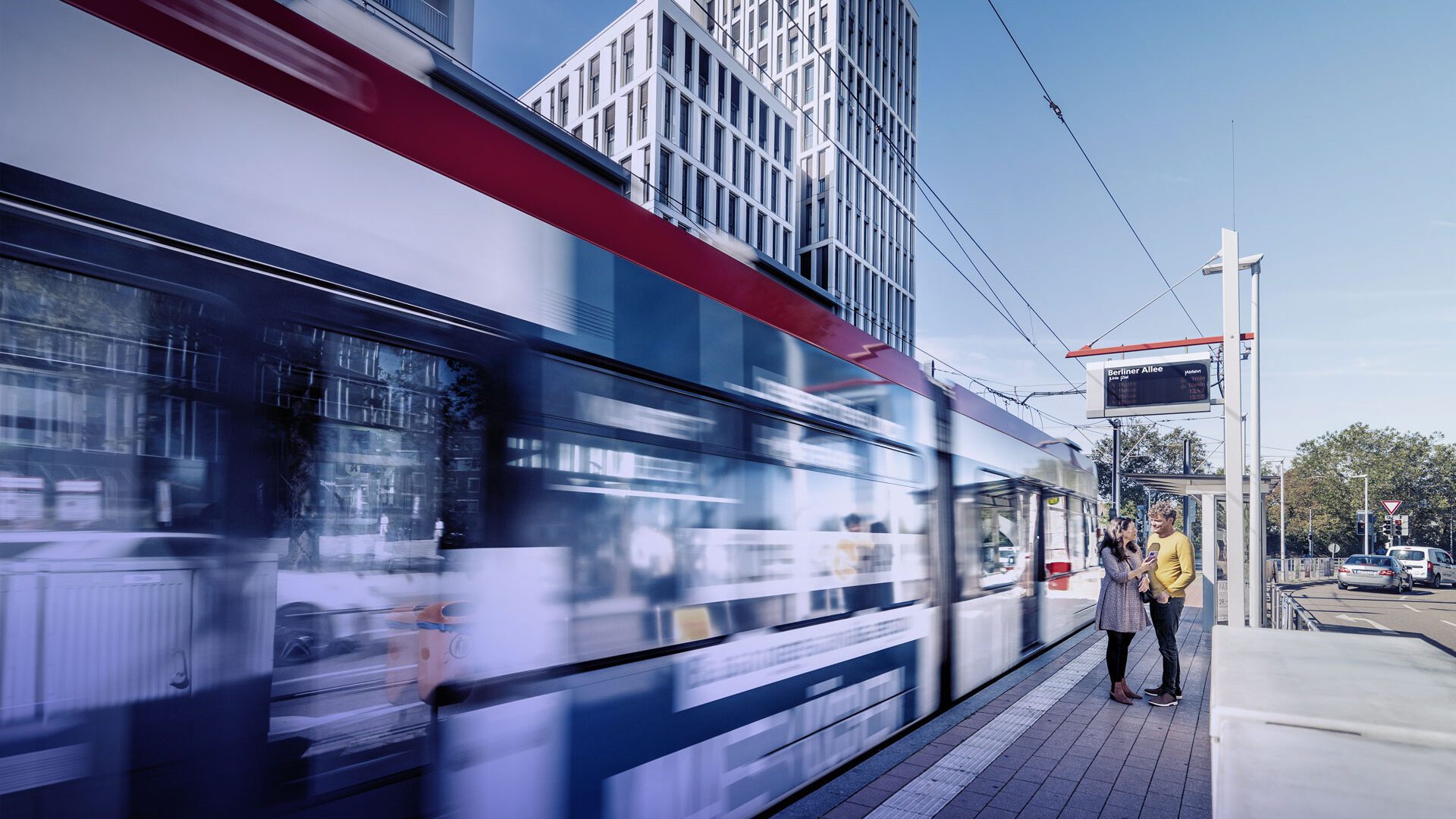
For transport companies, passenger satisfaction is the top priority. Well-informed passengers are happier passengers – even in the event of disruptions or delays. That is why transport companies want to keep their passengers reliably informed at all times about any changes that affect their journey.
For dynamic passenger information, information is collected from many sources within and outside the company. This data is transmitted in real time to all desired media – to information displays in vehicles and at stops, as well as to any websites or apps via data hubs.
Our solution for dynamic passenger information bundles data from numerous internal and external sources and makes it available in real time – on all desired channels:
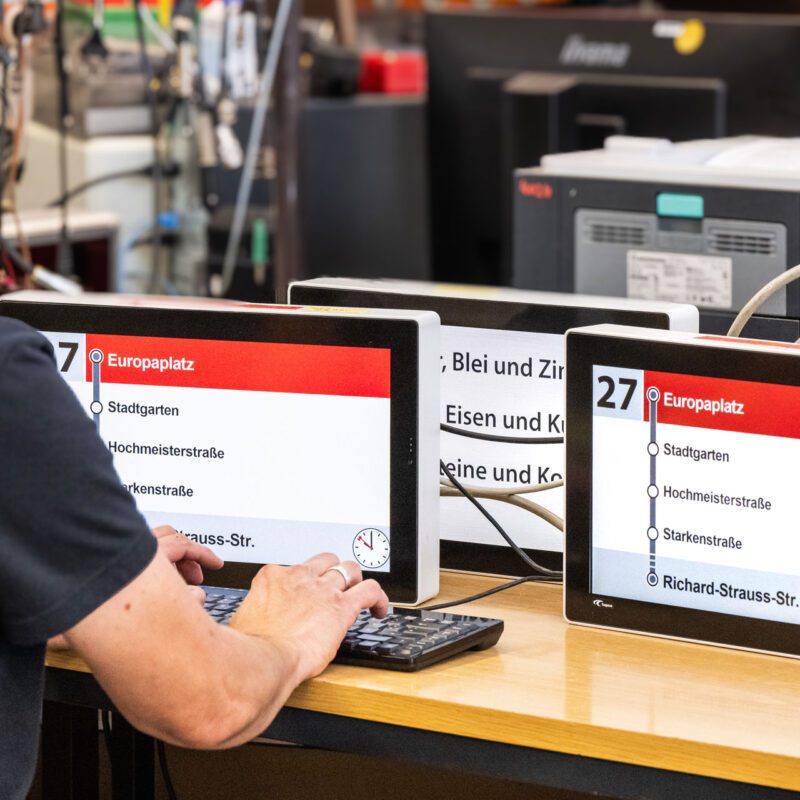
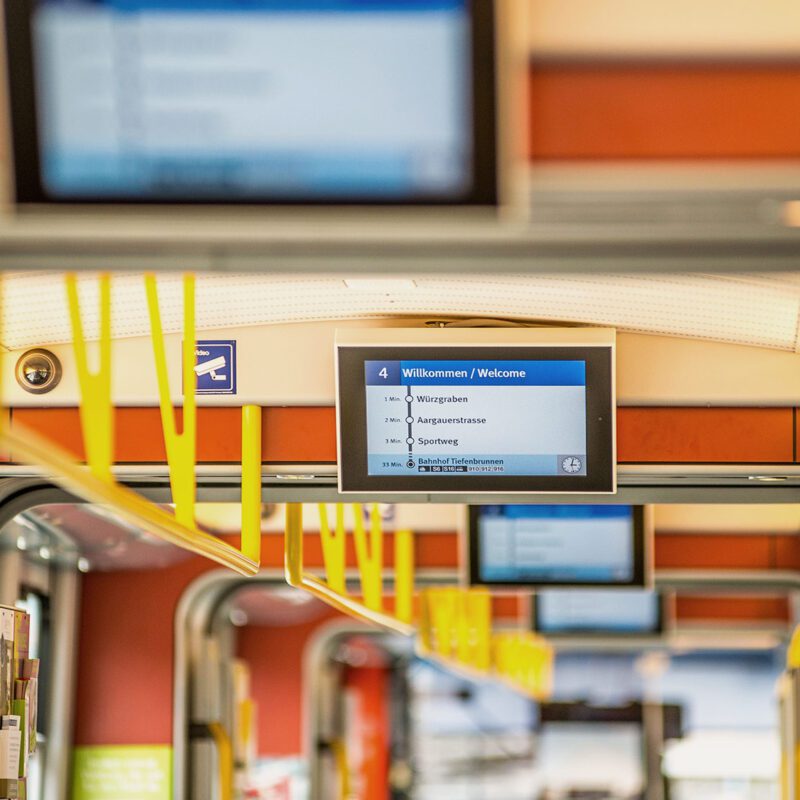
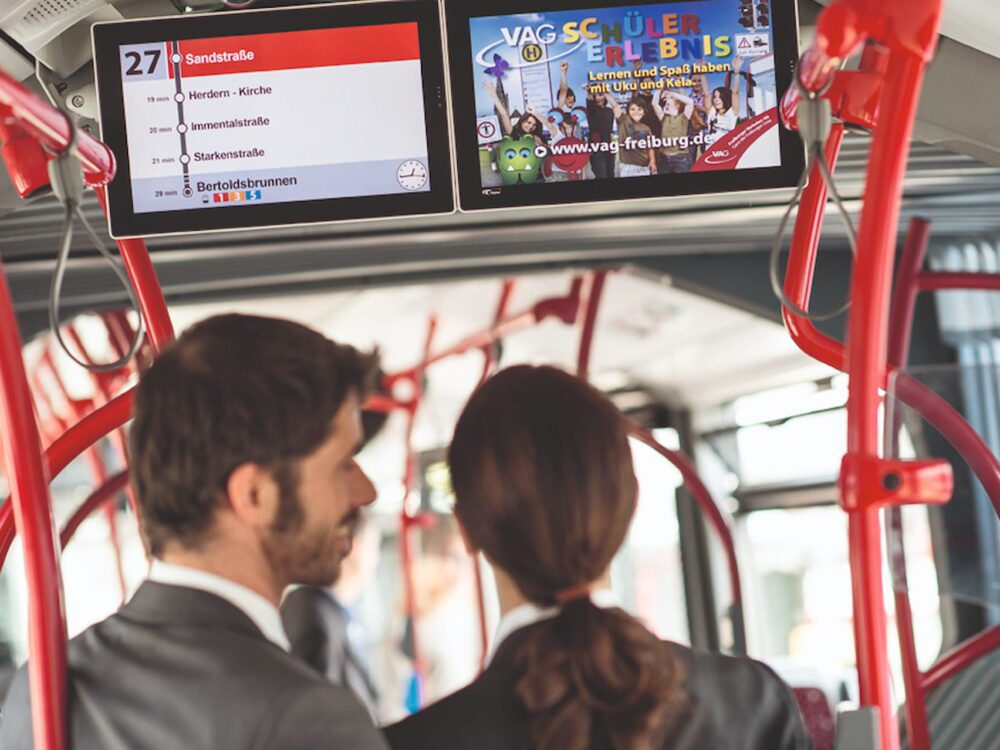
- In vehicles and at stops via modern display systems
- On digital platforms such as websites, apps or data hubs
This is how we create transparency, trust and customer satisfaction – for a passenger experience that makes public transport the first choice.



Related content




What is dynamic passenger information?
Dynamic passenger information provides passengers with real-time updates about departures, connections, delays and service disruptions. Information from multiple internal and external sources is consolidated and distributed across different communication channels.
Which channels can be used to communicate information?
Information can be displayed on vehicle displays, stop displays, websites, apps and data-sharing platforms. This allows passengers to stay informed before and throughout their journey.
What role does the on-board computer play?
The on-board computer acts as the central hub for visual and audio passenger information. It distributes route information, stop announcements, disruption messages and other operational updates.
Are audio announcements supported?
Yes. Audio announcements can be triggered automatically or manually through the control centre and delivered both inside vehicles and at stops.
What information can be displayed to passengers?
Passengers can receive information about upcoming stops, connections, delays, service disruptions and alternative travel options. Additional local or commercial information can also be displayed.
Can the system exchange data with third-party systems?
Yes. Standardised interfaces support information exchange with timetable systems, data hubs and third-party control systems, helping operators provide coordinated passenger information.
Ready for what’s next?
Transform your public transport operations with innovation engineered for change.