BVG launches pilot phase with ebblo’s mobility assistance system for greater accessibility in Berlin
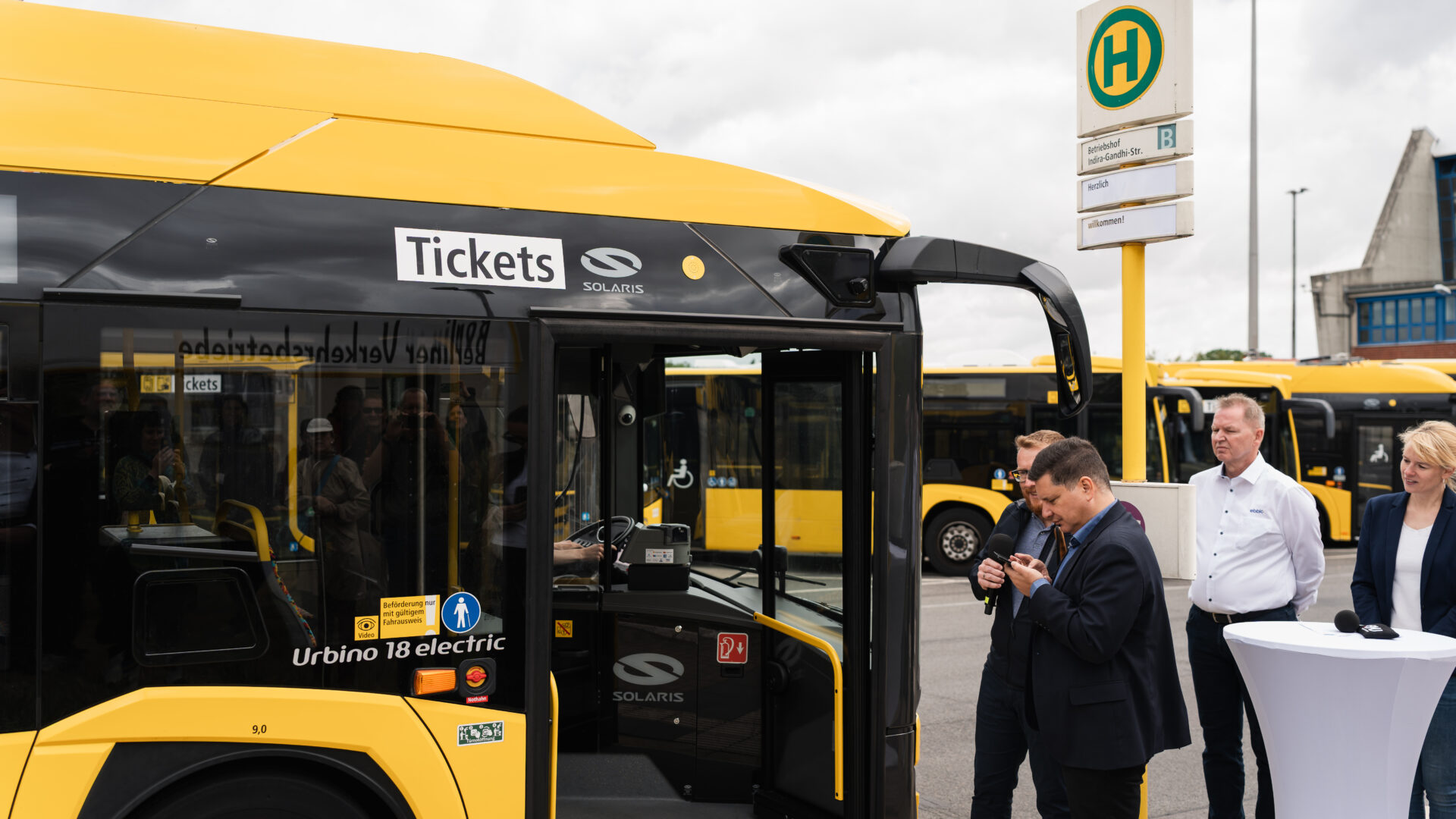
Berliner Verkehrsbetriebe (BVG) has launched the pilot phase of its «Fahrgastinformation akustisch» (acoustic passenger information) project. BVG announced the start of the pilot phase at an official press conference on 3 July 2026.
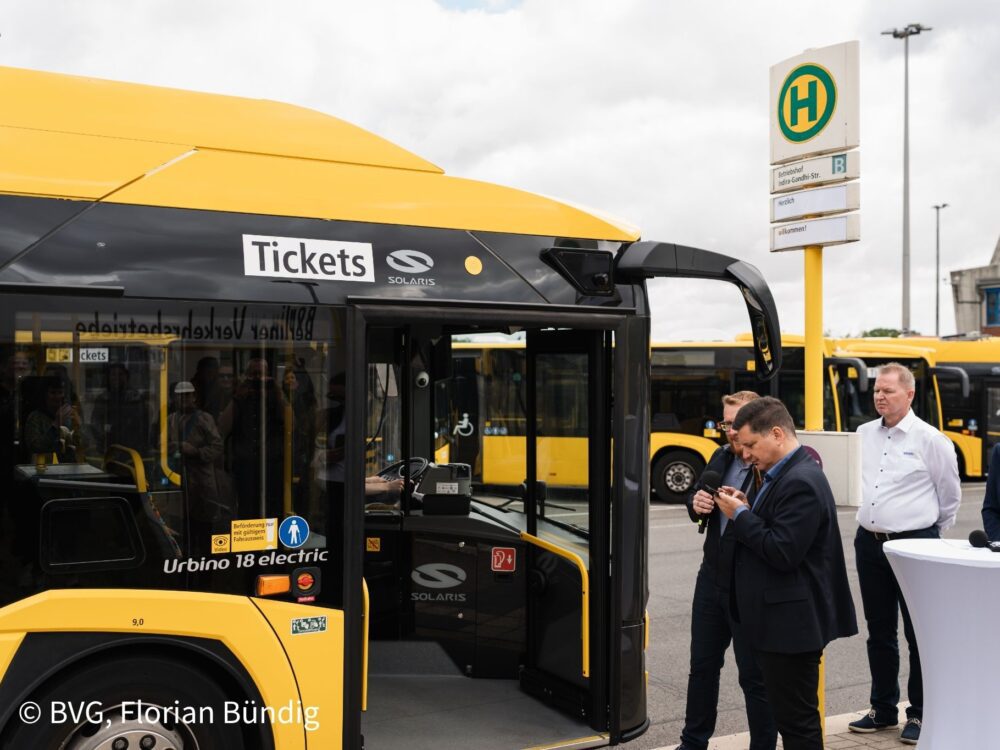
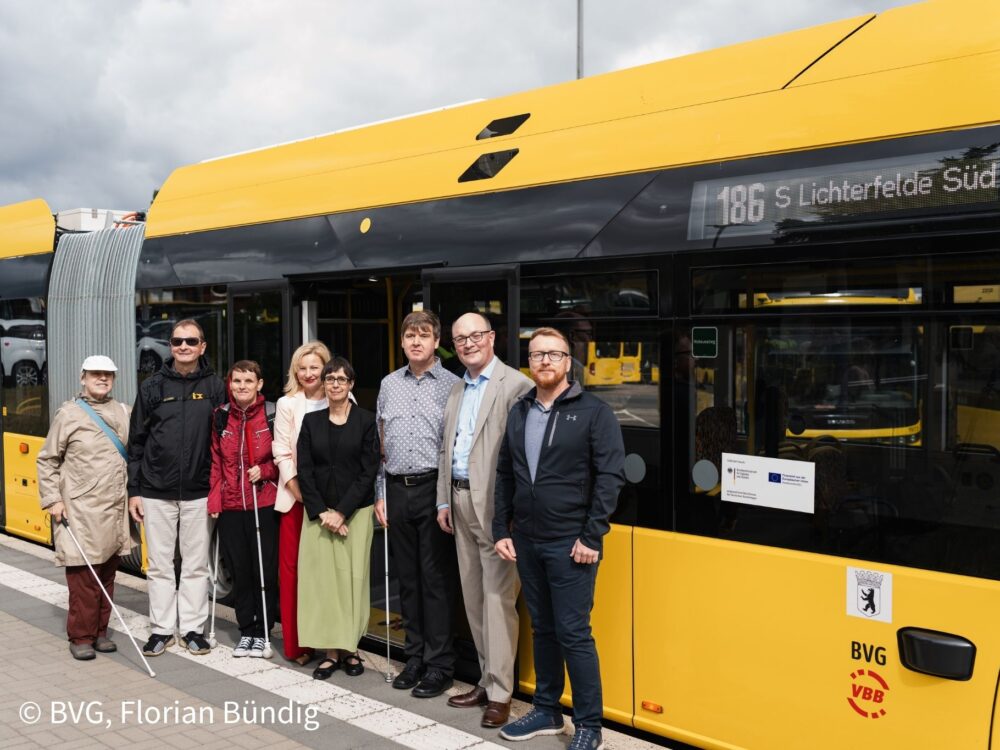
Under the motto «Hören. Einsteigen. Ankommen.» (Listen. Board. Arrive.), up to 20 buses on route 186 are now fitted with so-called «talking vehicles». The buses automatically announce their route number and destination through an external speaker, and support passengers further with an acoustic door-finding signal.
Mobility assistance in Berlin’s regular service
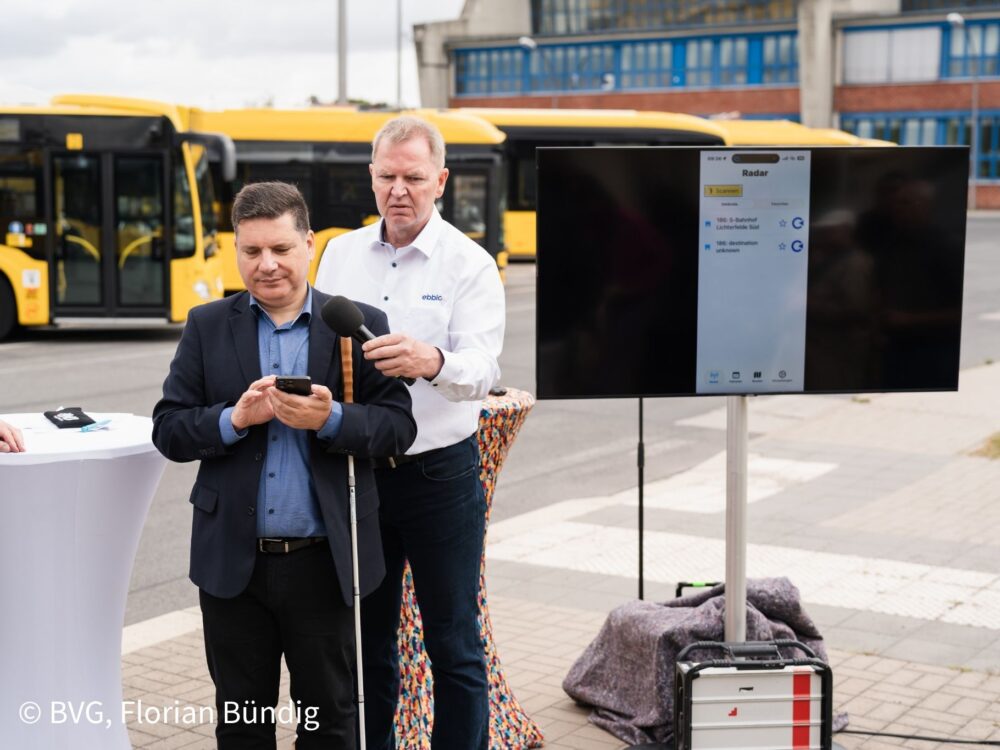
At the heart of the project is ebblo Assist, ebblo’s mobility assistance solution, used in the BVG project under the name INTROS. The system helps blind and visually impaired people orientate themselves in public transport, find the right entrance, and travel more independently. During the pilot phase, the solution is being used by BVG in regular service for the first time.
The sbv app for greater independence in public transport
In a second test phase, the system will be extended with the mobility assistance app from the Swiss Federation of the Blind and Visually Impaired (sbv). The app was developed on the principle of «by those affected, for those affected» and helps users with orientation and navigation, as well as digital boarding and alighting requests.
The close collaboration between sbv and ebblo brings together the needs of blind and visually impaired people with modern public transport technology. The overall system combines the app, on-board hardware, and backend into one integrated solution for greater inclusion and independent mobility.
Findings feed into Berlin-wide rollout
The pilot phase is supported by 20 selected test users, whose experience feeds directly into the further development of the solution. By the end of 2026, the findings from the test phase are set to feed step by step into the introduction of acoustic passenger information across Berlin’s bus and tram network.
A joint commitment to greater inclusion in public transport
With this project, BVG, sbv and ebblo are sending a strong joint signal for greater accessibility in local public transport. It shows how modern technology can help people with visual impairments use public transport independently, safely, and comfortably.
What is the aim of the project «Fahrgastinformation akustisch» (acoustic passenger information) pilot phase?
The pilot phase aims to give blind and visually impaired passengers more independence in public transport. To do this, BVG is testing automatic acoustic announcements and a door-finding signal on route 186, before rolling the solution out across Berlin step by step. The project was officially launched on 3 July 2026.
Which bus route is taking part in the pilot phase?
Up to 20 buses on route 186 are taking part in the pilot project. These so-called «talking vehicles» automatically announce their route number and destination through an external speaker, and support passengers further with an acoustic door-finding signal when boarding.
What is ebblo Assist, known as INTROS in this project?
ebblo Assist is ebblo’s mobility assistance solution. In the BVG project, it runs under the name INTROS and helps blind and visually impaired people orientate themselves in public transport, find the right entrance, and travel more independently.
How does the acoustic door-finding signal work?
Buses on route 186 automatically announce their route number and destination through an external speaker. The acoustic door-finding signal complements these announcements, helping passengers find the right entrance on the vehicle.
What role does the app from the Swiss Federation of the Blind and Visually Impaired (sbv) play?
In a second test phase, the system will be extended with the sbv’s mobility assistance app. It was developed on the principle of «by those affected, for those affected» and helps users with orientation, navigation, and digital boarding and alighting requests.
Who is taking part in the pilot phase, and what happens with the results?
20 selected test users are taking part in the pilot phase. Their experience feeds directly into the further development of the solution and forms the basis for BVG’s next steps up to the end of 2026.
When will acoustic passenger information be rolled out across Berlin?
By the end of 2026, the findings from the test phase are set to feed step by step into the introduction of acoustic passenger information across BVG’s bus and tram network, reaching further routes.