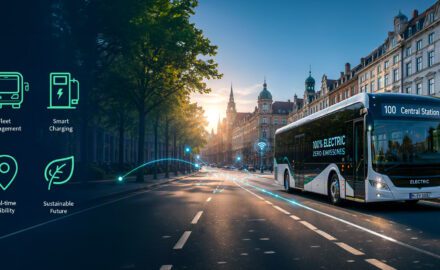

How data enhances the passenger and driver experience
People don’t use public transport for the fun of it – they use it to get from point A to B. Improving the passenger experience therefore making the journey as simple and stress-free as possible.
To achieve this transport operators need a technology solution that supports all users. From infrequent passengers who may require additional support, to regular travellers who simply want reliable information and services when they need it.
Intelligent Transport Systems (ITS), like the public transport itself, also needs to serve everyone. From highly mobile passengers to those with mobility limitations, the foundation of a positive journey experience is access to accurate information. When the right information is available at the right time, both passengers and drivers can move through the network with greater confidence.
How Data Supports Every Single Passenger
Passengers should be supported on their journey unobtrusively and inclusively. Providing information is the key to providing this support.
Historically, passengers would ask the driver for information. Delivering this information electronically not only improves consistency and accuracy but also reduces distractions for drivers, helping maintain safer and smoother driving – whether that be a bus, tram, train, or ferry.
Passenger information can be provided at every stage of the journey:
- Before travel: Journey planning information via printed materials, mobile apps or websites.
- During travel: Real-time information delivered through displays, announcements and mobile applications.
- After travel: Reassurance that return or onward connections are available.
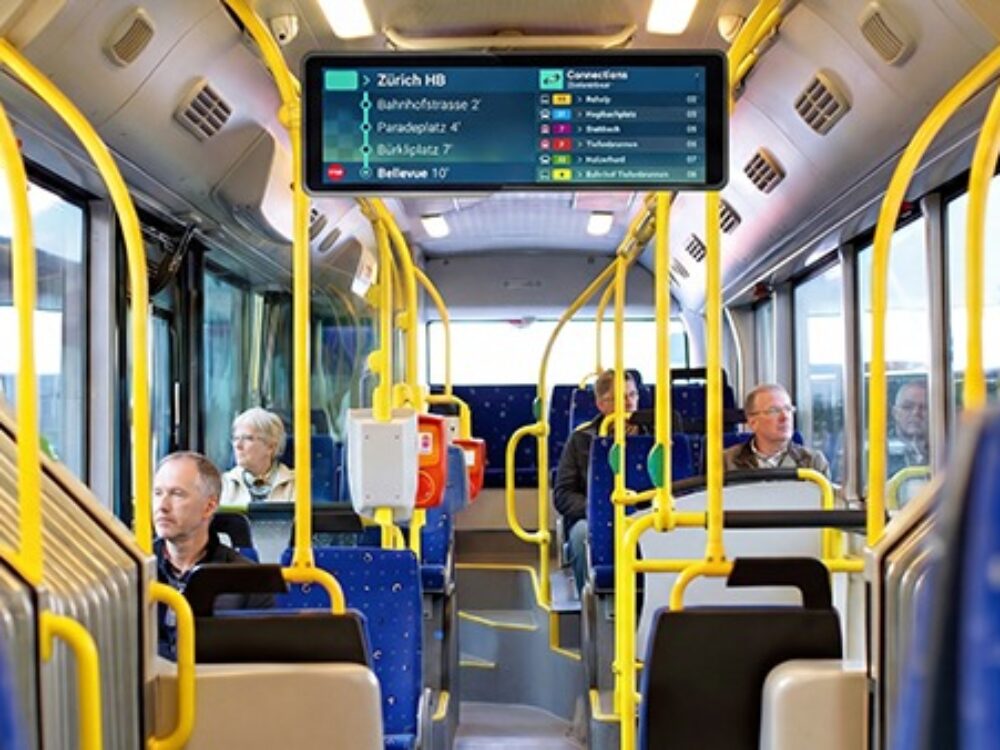
During the journey itself, passengers benefit from automated audio and visual information that updates as the vehicle progresses along its route. A simple example is the announcement of the next stop and destination.
More advanced systems can provide:
- Next stop and subsequent stop information.
- Connection details for onward services.
- Interchange information.
- Information about other transport modes displayed alongside the current service.
For passengers requiring additional support, mobility assistance applications can help them navigate their journey with greater independence. For example, These apps can identify the correct route, notify passengers when their service is approaching, guide them to the correct boarding point and continue providing support throughout the trip. Where necessary, passengers may also receive physical support from the driver, both when boarding and alighting.
Announcements notifying passengers of the the next stop at a suitable, but not intrusive, level provides a level of reassurance throughout their journey. The regular passenger can read their book or use their mobile device, listening only for their stop to be announced. Less frequent travellers can follow the route in real-time, whilst audio announcements provide important support for visually impaired passengers. All passengers, regardless of their experience of the trip, feel reassured during their journey, which minimises the stress of missing a stop.
Passengers often adapt quickly to new technology. When Transport for London introduced its iBus system with audio and visual next-stop announcements, some passengers initially viewed the announcements as intrusive. However, opinions soon changed. When the national BBC news channel Radio 4 interviewed some passengers about the experience. One particular passenger who had previously criticised the system later commented that the announcements allowed them to become immersed in a book, knowing they would still be alerted when their stop approached. Rather than being disruptive, the information became a reassuring part of the journey experience.
How Data Supports Drivers
The benefits of accurate, real-time data are equally important for drivers.
Providing drivers with live information about whether a vehicle is running early, late or maintaining the correct headway removes the need for constant mental calculations and allows them to focus on driving safely.
Graphical representations, backed by colour-coded labels, rather than pure numbers, turns data into easily digestible information, without needing to process hard facts.
For example:
- Green: Vehicle is operating as expected.
- Orange: Attention may be required.
- Red: Action or investigation may be needed.
Presenting information visually helps drivers absorb important updates quickly and with minimal distraction.
Of course, if a vehicle is held up in a traffic jam and there is nothing the driver can do to compensate, then having a bright red button reminding the driver of how late the service is won’t be very helpful. In these situations, the control system should support operational interventions, such as temporarily suspending timetable adherence or applying timetable offsets to bring services back into alignment.
These actions are typically implemented alongside wider network recovery plans. Through data collection and measurement, the impact of the delay can be quantified, and the effectiveness of the dispatching actions assessed.
Accurate Data is Everything
This quick assimilation and rapid dependence on information means that information must be must always be relevant, timely and, above all, accurate.
The name of the next stop must be correct and clearly announced. The need for clarity and accuracy is particularly relevant during a disruption, such as vehicle diversions. With the carefully prepared route information no longer being correct, the system must update what is being displayed to reflect what is actually happening in reality.
When a diversion occurs:
- Drivers need clear guidance on the revised route.
- On-board systems may use SATNAV functionality to assist navigation.
- Passenger information systems must clearly identify which stops will no longer be served.
- Passengers should have sufficient information to make alternative travel decisions where necessary.
Where system capabilities allow, operators can go a step further by providing information about why a diversion has occurred, helping passengers better understand the situation.
In times of large scale or significant disruption, it may be sensible for the control centre to make announcements to the affected vehicles, informing both passengers and the driver about:
- The nature of the disruption.
- Actions being taken to address the issue.
- Expected duration and recovery times.
Broadcast announcements to the wider fleet will also help optimise communications. In every case, the right data is critical to delivering the right information to the right people at the right time.
Intelligent Transport Systems can help with all of these passenger and driver needs, across the entire public transport network.
Payment
Fare payment is another important element of passenger experience.
Making payments seamless, non-threatening and with minimal or no contact, helps significantly to encourage and retain passengers. The simplicity that people have come to expect from smartphones should be reflected in public transport systems as well.
Ideally, travelling should be straightforward. You board and then alight, with payment handled automatically through an app or just a bank card. Special offers, multiple trip tickets, and other complexities of legacy travel can be simplified create a more convenient and accessible experience.
However, these systems must work well and be both reliable and resilient. For example, in Moscow, the metro supports the use of EMV smart cards to check-in and out. It is an easy, simple process which meant no one had to struggle with the ticket machine. But when one day the EMV cards suddenly were no longer accepted due to data issues, passengers experienced significant inconvenience and forced to walk to their destination.
This highlights a critical reality: systems must not only work well, they must continue to work consistently. Data must always be processed accurately and reliably.
Unfortunately, one single negative experience can outweigh many positive trips and undermine passenger confidence in the service.
Conclusion
Travelling by public transport requires a degree of planning awareness and confidence, which technology can make less demanding by making it easy to use and creating a better experience for both passengers and drivers. But this depends on accurate data being available both before travel and in real time during the journey.
For passengers, the introduction journey planning tools, real-tie information and pos-trip support, makes travel easier and increases the encourages continued use of public transport. For drivers, removing the distraction of passenger enquiries, and providing clear, easy to understand, real-time operational information helps minimise distractions and supports safer, smoother service delivery.
Ultimately, Intelligent Transport Systems have the ability to improve the experience for both passengers and drivers simultaneously. By delivering accurate, timely and accessible information, they help create a more connected, efficient and user-friendly public transport network.
ebblo Intelligent Transport Systems for Bus, Trams, Ferry Hub
This blog is Part 2 of a series on data analytics and public transport. See also:
Part 1 – Why Data Analytics and Reporting is Important for Public Transport Authorities
Part 3 – Headway Versus Timetable – How Real-Time Data Provides Great Customer Service!